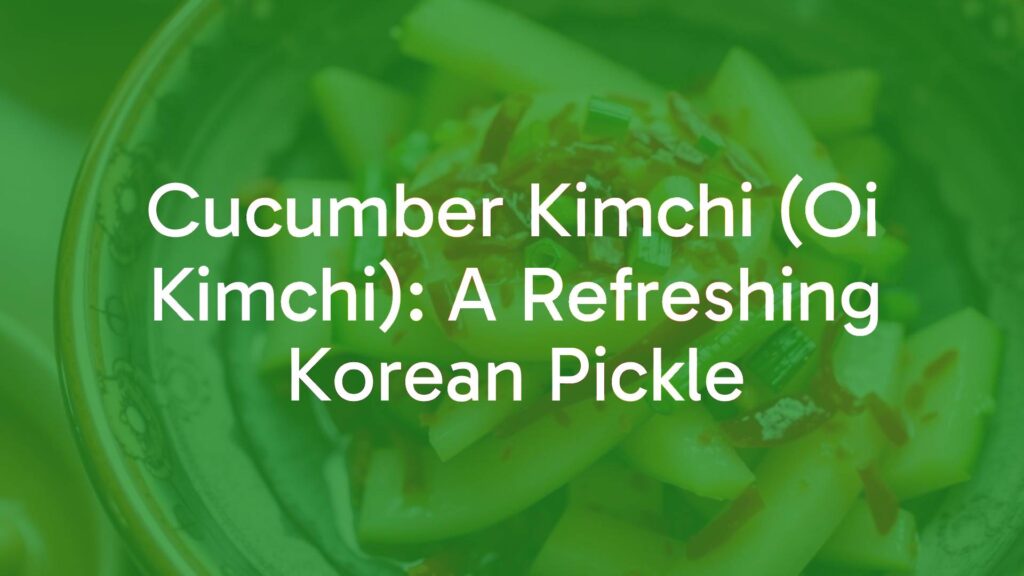
Cucumber Kimchi (Oi Kimchi): A Refreshing Take on Korean Fermentation
Introduction to Cucumber Kimchi
Cucumber kimchi, known in Korean as oi kimchi (오이김치), is a beloved fresh-style kimchi that stands apart for its light, crisp texture and vibrant, tangy-spicy flavor. Unlike its more famous cousin made with Napa cabbage, cucumber kimchi is prized for its ability to cool and invigorate the palate, making it especially popular during Korea’s hot and humid summers.
Defining Characteristics
Cucumber kimchi is distinctive for its use of fresh cucumbers, which remain crunchy after fermenting with a blend of chili flakes, garlic, scallions, and sometimes carrots or onions. The dish is typically prepared as a quick kimchi—meaning it can be eaten fresh or with a short fermentation time, allowing the vegetables to retain their snappy texture. The overall flavor is a lively balance of spicy, garlicky, and savory-sour notes that highlight the crispness of the cucumber.
Origins and Cultural Significance
While kimchi itself is a centuries-old staple at the Korean table, cucumber kimchi has grown in popularity more recently, gaining particular traction in the last hundred years as cucumbers became more widely cultivated throughout Korea. Historically, oi kimchi has been favored in southern regions like Jeolla-do, where bountiful local produce inspired a multitude of kimchi variations. Today, it’s enjoyed across the country, especially in warmer months.
Core Ingredients and Preparation
The defining ingredients of cucumber kimchi are fresh Korean or Persian cucumbers, coarse sea salt, gochugaru (Korean red chili flakes), garlic, scallions, and often a touch of fish sauce or salted shrimp. Depending on regional habits or family recipes, one may also find julienned carrots, Asian chives, or a dash of sugar for balance.
Preparation typically begins by salting cucumbers to draw out excess moisture, ensuring they stay crisp during the fermenting process. The vegetables are then dressed with a flavorful seasoning paste and either packed whole or cut into spears or rounds. The option for short fermentation (a day or two) allows the cucumbers to remain both tangy and refreshing.
Variations and Adaptations
Cucumber kimchi offers plenty of room for creativity. Some versions, called oi sobagi, feature cucumbers slit lengthwise and stuffed with the seasoning mixture, resulting in a visually striking and extra flavorful presentation. Others may incorporate perilla leaves, garlic chives, or radish for additional dimension. Vegetarian adaptations are common, substituting soy sauce for fish sauce or omitting seafood-based seasonings altogether without sacrificing complexity.
Serving Suggestions and Pairings
Oi kimchi is most commonly served as a banchan (side dish) accompanying rice-based meals, Korean barbecue, or summery noodle dishes. Its crisp and refreshing character provides an ideal counterbalance to rich, grilled meats or spicy stews. For beverage pairings, cucumber kimchi shines alongside light Korean lagers, soju, or a cool glass of barley tea, all of which complement its zesty profile.
Conclusion
Cucumber kimchi continues to capture diners’ imaginations with its clean flavors and revitalizing crunch. Whether served fresh or lightly fermented, it remains a testament to the variety and adaptability of Korean kimchi tradition—a perfect gateway for newcomers and a refreshing classic for kimchi aficionados alike.
