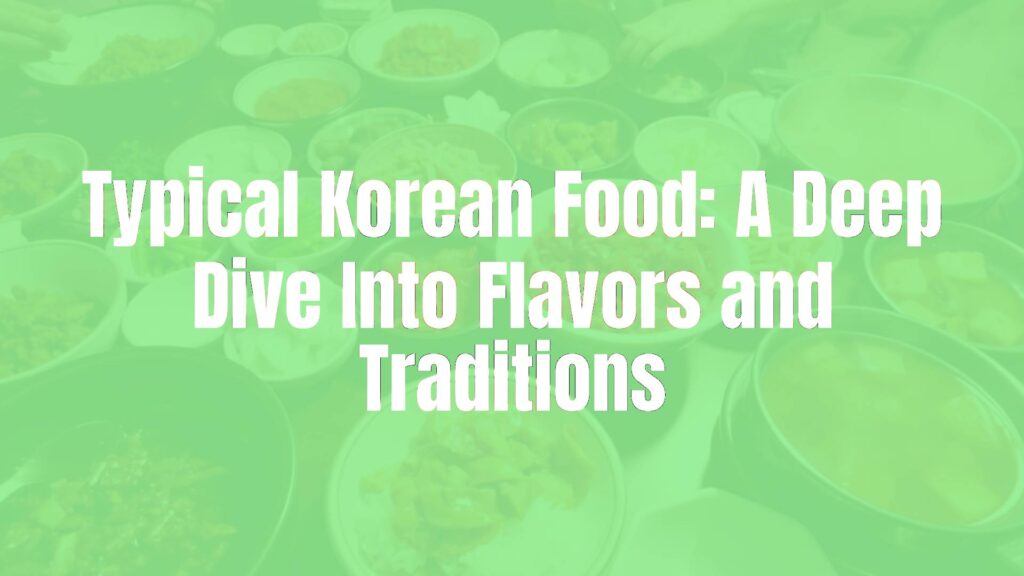
What makes Korean food “typical”? Korean food is known for its strong flavors, fresh ingredients, and old traditions. Meals are meant to be shared, with many small side dishes (banchan) served with every meal. Fermentation is a big part of the taste, giving dishes like kimchi their strong and unique flavors. Besides the classics you might already know, each region in Korea has its own special foods and customs, which show just how rich and diverse Korean food can be.
Korean food offers everything from the spicy taste of gochujang (chili paste) to a warm and hearty stew. Every bite is a balance of flavors and also reflects the culture’s view on harmony in daily life. This article will cover the main features, key ingredients, and popular dishes that make Korean cuisine special and enjoyable for everyone.

What makes Korean food special?
Main features of Korean cuisine
Korean food is a mix of strong, often spicy flavors, and lots of fresh vegetables, garlic, and ginger. Most meals are eaten together, with everyone sharing rice or noodles and several side dishes. This creates a meal with many tastes and textures. Fresh and seasonal ingredients are always preferred, using lots of veggies, seafood, and meats in different ways.
Soups and stews, called “jjigae” or “guk”, are a big part of meals, especially in cold weather. These are often hot and full of flavor. Different ways of cooking are used, such as stir-frying, grilling, braising, and fermenting, all adding to the deep and memorable flavors of Korean food.
Regional styles in Korean cooking
Even though certain features are found everywhere, each region in Korea has its own foods, shaped by local produce and history. For instance, Chuncheon is famous for Dak-galbi, a spicy chicken stir-fry that uses local chicken. Coastal regions use more seafood, while inland areas often use meat and mountain vegetables. Even kimchi-probably the most famous Korean food-changes from one region to another, with different vegetables and spice levels. Because of these regional differences, there is always something new to try in Korean food.

Korean dining customs and manners
Meals in Korea are about eating together and following certain table manners. Usually, everyone gets a bowl of rice, a soup or stew, and several side dishes are placed in the center for sharing. Unlike Western meals where dishes are brought out one after another, everything is served at the same time, making it easy to share.
Chopsticks and a spoon are the usual utensils-use the spoon for rice and soup, chopsticks for other dishes. It’s polite to wait until the oldest person at the table starts before you begin eating. Poured drinks are given to others before pouring your own, and food or items are given with both hands to show respect. These small customs help make meal times friendly and respectful.
What ingredients are commonly used in Korean food?
Main grains and starches
Rice is at the center of almost every Korean meal. Most often, white rice is served plain, but mixed grain rice (japgokbap) is also eaten for extra nutrition. Noodles are also important. Japchae is made with glass noodles (from sweet potato starch), while wheat noodles are used in kalguksu and jjajangmyeon. Rice cakes (tteok) are found in both main and sweet dishes.
Fermented items and sauces
Fermented foods are what make Korean food taste so special. Kimchi, made mostly with napa cabbage or radish, is the most famous. It’s spicy, sour, and full of flavor, and there are many kinds, like the mild dongchimi (water-based radish kimchi) or crunchy cucumber kimchi.
Fermented chili paste (gochujang) and soybean paste (doenjang) are must-haves for many dishes. These bring deep, rich flavor to soups, stews, marinades, and dipping sauces like ssamjang. Fermentation gives Korean food its unique taste and makes it stand out.

Common vegetables and proteins
Korean food uses a big mix of vegetables, from napa cabbage and radish to wild greens, mushrooms, carrots, and more. These are eaten raw, blanched, pickled, or stir-fried.
Proteins include beef, pork, chicken, and also lots of seafood like fish, shellfish, and seaweed. Some dishes use raw fish or meat. Mixing proteins with many vegetables means Korean meals bring both flavor and good nutrition.
Which dishes are typically Korean?
| Dish Name | Main Ingredients | Description |
|---|---|---|
| Kimchi | Napa cabbage or radish, chili powder, garlic, ginger | A spicy and fermented vegetable side, served at almost every meal. |
| Bibimbap | Rice, seasoned vegetables, meat, egg, chili paste | Rice topped with colorful vegetables and other toppings, mixed before eating. |
| Bulgogi | Thinly sliced beef, soy sauce, garlic, sugar, sesame oil | Marinated meat grilled for a sweet and savory taste. |
| Samgyeopsal | Pork belly, lettuce, garlic, ssamjang | Grilled pork belly eaten with lettuce wraps and sides. |
| Japchae | Sweet potato noodles, beef, vegetables, soy sauce | Stir-fried glass noodles mixed with veggies and sometimes meat. |
| Tteokbokki | Rice cakes, gochujang, fish cakes, eggs | Rice cakes in a spicy and sweet red sauce with fish cakes and eggs. |
| Sundubu Jjigae | Soft tofu, seafood or meat, gochujang, vegetables | A warming stew with delicate tofu in a spicy broth. |
| Jjajangmyeon | Wheat noodles, black bean paste, pork, onions | Noodles in a thick black bean sauce with vegetables and sometimes meat. |
| Gimbap | Rice, seaweed, vegetables, cooked protein | Rice rolls filled with cooked ingredients, sliced for easy eating. |
| Korean Fried Chicken | Chicken, flour or starch, sauces | Double-fried chicken with a crispy outside, served plain or with sauces. |
| Jeon | Vegetables or seafood, flour, egg | Savory pancakes pan-fried until golden and crispy. |

Popular Korean soups and stews
- Kimchi jjigae: Spicy stew made with older kimchi, pork or other meat, tofu, and vegetables, often served bubbling hot.
- Doenjang jjigae: Savory stew using soybean paste, tofu, zucchini, and mushrooms, bringing a deep, earthy taste.
- Seolleongtang: Soup made by simmering ox bones for a long time, resulting in a milky broth served with beef slices and noodles.
- Galbitang: Clear soup with beef short ribs, radish, egg, and sometimes noodles, known for its rich and delicate flavor.
- Budae jjigae: “Army stew” with ingredients like spam, hot dogs, kimchi, ramen, and cheese, cooked in a spicy broth-a result of mixing Korean and American foods after the war.
What are banchan (side dishes) in Korean food?
Types of banchan
Banchan are small side dishes eaten with every meal in Korea. They can be vegetables (like seasoned spinach or bean sprouts), pickles, stir-fried items (like fish cake), or braised tofu, for example. Some are spicy, some sour, and some mild. There might also be small omelets, pancakes, or little servings of cooked meat or seafood. Kimchi is always present, in many forms.
Why banchan are important
Banchan give meals variety and help make sure people eat many kinds of foods. They add vitamins and fiber through lots of vegetables, and many are fermented, supporting good digestion. Eating banchan means people try small bits of many things, sharing food and building a friendly community around the table. Many banchan are made in large amounts, showing care and hospitality. Banchan are an essential part of Korean meals, not just extras.
Health benefits and things to watch out for in Korean food
| Health Benefits | Points to Watch |
|---|---|
|
|
Where can you eat authentic Korean food?
Best places to eat in Korea
For a true taste of Korean food, visit Korea. In Seoul, you can find everything from simple street food to fancy restaurants. Places like Myeongdong, Insadong, and Hongdae are filled with eateries serving all the classics. Regional cities also offer local dishes you can’t find elsewhere, like Chuncheon’s Dak-galbi. Markets are also great places to try different foods, from snacks to full meals, and you can see how meals are prepared.
How to find good Korean restaurants outside Korea
All over the world, Korean food is easy to find. Look for restaurants with Korean customers-a good sign of authenticity. A wide selection of side dishes (banchan) is another clue. Check the atmosphere; busy and lively is often a good indicator. Don’t hesitate to ask for staff recommendations, and see what others are eating. While food might be slightly changed for local tastes, many places still make Korean food the traditional way.
Korean street food and market favorites
Korean street food is an easy and tasty way to experience the local flavors. Dishes like tteokbokki (spicy rice cakes), eomuk (fish cakes), sundae (blood sausage), and different kinds of jeon (pancakes) are popular options. You can find these at food stalls, night markets, or snack bars throughout Korea.
Visiting markets such as Gwangjang Market in Seoul, you can try bindaetteok (mung bean pancakes), kalguksu (knife-cut noodle soup), and a huge selection of fresh banchan. Shopping and eating at these markets is a fun way to see and taste what everyday Korean food is all about.
