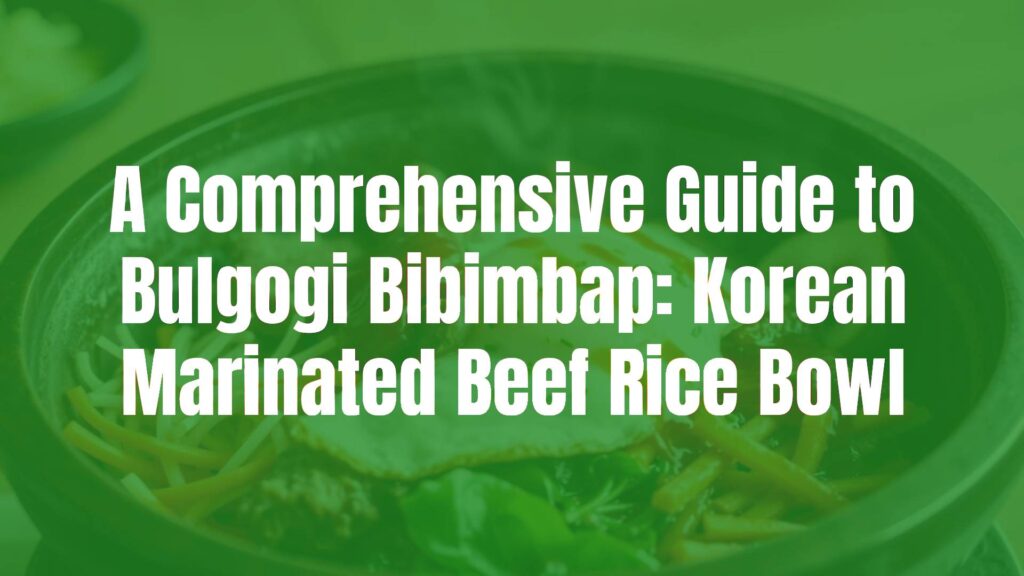
Introduction to Bulgogi Bibimbap
Bulgogi bibimbap is a vibrant and flavorful Korean rice bowl dish that harmoniously blends two beloved staples of Korean cuisine: bulgogi (marinated, grilled beef) and bibimbap (mixed rice with assorted vegetables and toppings). Noted for its stunning presentation and satisfying combination of flavors and textures, bulgogi bibimbap offers a unique twist on the traditional bibimbap by featuring savory-sweet marinated beef as its star ingredient.
Defining Features and Culinary Experience
What sets bulgogi bibimbap apart is its delightful integration of thinly sliced beef, marinated in a mixture of soy sauce, garlic, sugar, sesame oil, and pepper. The bulgogi is typically grilled or pan-seared, then placed atop a bed of steamed white rice alongside an assortment of sautéed or pickled vegetables, such as spinach, bean sprouts, carrots, and shiitake mushrooms. The medley is often topped with a runny fried egg and served with a dollop of gochujang (spicy red pepper paste), allowing diners to mix all components together to their taste.
The resulting dish delivers a rich, umami-packed flavor profile. Bulgogi imparts mild sweetness, umami, and a hint of smokiness, beautifully complemented by the crispness of fresh or lightly cooked vegetables, the creaminess of the egg yolk, and the subtle heat from gochujang. The interplay of textures—tender beef, chewy rice, crunchy vegetables—makes every bite exciting.
Historical and Cultural Significance
Bibimbap’s origins are deeply rooted in Korean tradition, dating back centuries as a dish enjoyed for its practicality and nutritional balance. While classic versions rely on assorted vegetables and sometimes a simple protein like fried egg or ground beef, including premium bulgogi as the main topping reflects a fusion of everyday comfort with celebratory flavors. Bulgogi itself originated during the Goguryeo dynasty (37 BCE–668 CE), originally cooked over open flames and reserved for the upper class. Over time, both dishes became accessible nationwide, with their combination in bulgogi bibimbap demonstrating Korea’s culinary creativity.
Though ubiquitous across the nation, bulgogi bibimbap is especially popular in modern Korean restaurants and urban eateries, where its customizable character and visual appeal attract both locals and international diners.
Key Components of Bulgogi Bibimbap
- Rice: Short-grain white rice forms the base, prized for its soft and sticky texture that holds the bowl together.
- Bulgogi: Thin slices of beef marinated in a blend of soy sauce, sugar, garlic, sesame oil, and black pepper, often with additions like pear juice for enhanced tenderness and sweetness.
- Vegetables: Commonly includes sautéed spinach, bean sprouts, carrot strips, zucchini, mushrooms, and sometimes pickled radish or seaweed.
- Egg: A sunny-side-up or softly fried egg provides richness and visual appeal.
- Gochujang: Fermented chili paste brings a spicy, tangy kick that ties the elements together.
Popular Variations and Substitutions
Bulgogi bibimbap is inherently versatile. While beef bulgogi is the classic protein, some variations substitute with chicken bulgogi or marinated pork for those with different preferences. Vegetarians can enjoy a similar experience by using marinated tofu or mushrooms to approximate bulgogi’s savory depth. Vegetable toppings are easily adapted based on seasonality and availability; leafy greens, shredded lettuce, or even kimchi may be added for variety. Brown or multigrain rice can provide a nuttier, more wholesome base for those seeking alternatives to white rice.
In restaurants, it is common to encounter dolsot bibimbap—a version served in a hot stone bowl that crisps the rice on the bottom, adding another layer of texture and flavor.
Serving and Enjoyment Suggestions
Bulgogi bibimbap is usually served as a standalone main dish, as its variety of ingredients deliver a balanced meal in one bowl. It pairs beautifully with light accompaniments such as kimchi, pickled vegetables, or a simple seaweed soup. For drinks, mild teas (like barley or corn tea), Korean rice punch (sikhye), or light lagers complement the dish’s bold flavors while refreshing the palate.
This dish invites personalization—diners are encouraged to mix the bowl thoroughly just before eating to achieve its namesake “mixed rice” character, ensuring every bite offers a harmonious blend of savory bulgogi, crisp vegetables, fluffy rice, and spicy gochujang.
