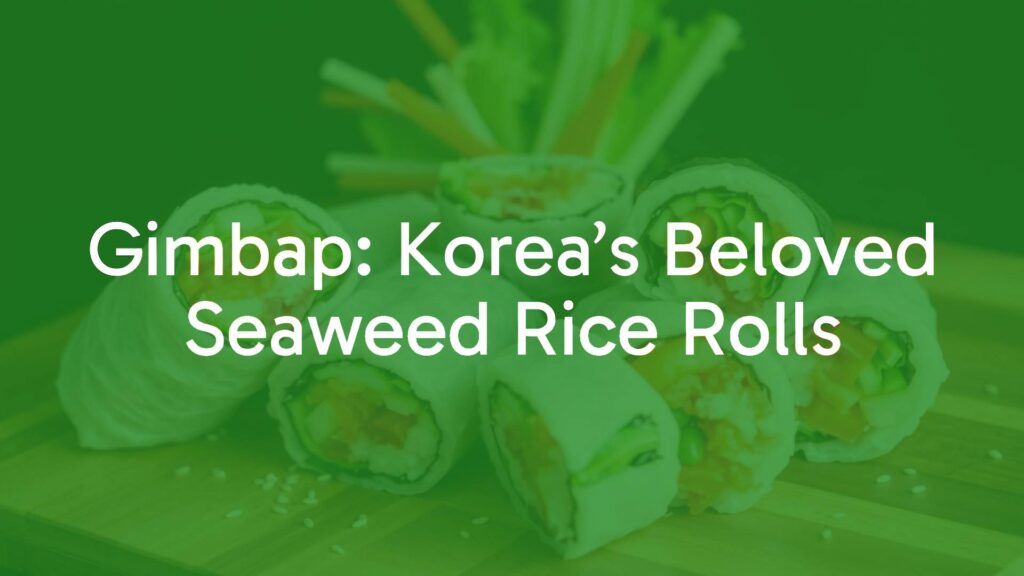
Understanding Gimbap: Korea’s Iconic Rice Roll
Gimbap (often spelled “kimbap”), directly translated as “seaweed rice,” is a celebrated Korean dish comprised of rice and assorted fillings rolled in sheets of dried seaweed (gim) and sliced into bite-sized pieces. Renowned for its vibrant cross-section, portability, and adaptability, gimbap holds a special place in both daily meals and festive occasions in Korea.
Defining Characteristics
What distinguishes gimbap from other similar foods—such as Japanese sushi rolls—is both its ingredients and its seasoning. Koreans season the rice with sesame oil and a pinch of salt, resulting in an aromatic, nutty base. Typical fillings include a mix of fresh and preserved ingredients—thinly sliced omelet, pickled radish (danmuji), carrots, spinach, imitation crab, and cooked beef, all artfully stacked within each roll. The outer layer is a glistening sheet of roasted, savory seaweed.
Gimbap’s flavor profile is balanced and mild, with subtle earthy, sweet, and tangy notes from the variety of fillings. Its texture features a satisfying contrast between soft rice, tender vegetables, and the slight chewiness of seaweed.
Historical Roots and Cultural Context
The origin of gimbap is often debated in Korea. While some attribute its ancestry to Japanese norimaki introduced during the early 20th century, others argue it evolved from native Korean rice-and-seaweed dishes, such as bokssam. Regardless of its precise beginnings, gimbap rose to prominence as a popular, convenient street food and picnic staple in the latter half of the 20th century. Today, gimbap is enjoyed at family gatherings, school outings, and as a quick lunch for busy urbanites across Korea.
Essential Ingredients and Preparation
Classic gimbap features short-grain white rice seasoned with sesame oil and salt, and gim (roasted seaweed sheets). The fillings can vary, but commonly include:
- Egg omelet, sliced into thin strips
- Pickled radish (danmuji), giving a sweet and tangy crunch
- Carrots, julienned and lightly sauteed
- Spinach, blanched and seasoned
- Protein such as beef bulgogi, ham, or imitation crab sticks
- Occasionally, other items like cucumber or burdock root
The assembled ingredients are evenly spread on a seaweed sheet atop a layer of seasoned rice. With the help of a bamboo mat, the roll is tightly formed and sliced into bite-sized rounds, each revealing a colorful medley of textures and flavors.
Regional Styles and Common Variations
Gimbap’s enduring popularity has spawned countless regional and contemporary variations:
- Chungmu-gimbap: Originating from Chungmu (Tongyeong), this style features smaller, plain rice rolls served with spicy squid salad and radish kimchi.
- Mayak gimbap: A Seoul street food specialty, these petite rolls are filled simply with rice and vegetables, often paired with a mustard-soy sauce for dipping.
- Samgak gimbap: Convenient triangle-shaped rice packets, usually pre-packaged and sold at convenience stores, with various fillings inside.
Newer adaptations reflect contemporary tastes, incorporating kimchi, tuna-mayo, cheese, or even perilla leaves for an herbal note. Vegetarian and vegan gimbap versions have become more common, substituting meat with plant-based proteins or extra vegetables.
Serving Suggestions and Pairings
Gimbap is typically enjoyed at room temperature and travels well, making it perfect for lunchboxes or picnics. It is commonly accompanied by danmuji (pickled yellow radish) and sometimes kimchi. For a refreshing accompaniment, a simple soup such as miyeok-guk (seaweed soup) or a mild drink like barley tea (boricha) can be served alongside. In Korea, gimbap is also a favorite pairing with ramyeon (instant noodle soup) for a quick, satisfying meal.
Conclusion
With its colorful appearance, comforting flavors, and boundless adaptability, gimbap remains a quintessential part of Korean cuisine. Whether prepared traditionally or with a creative twist, its appeal endures among all age groups, embodying the harmony and communal spirit of Korean food culture.
