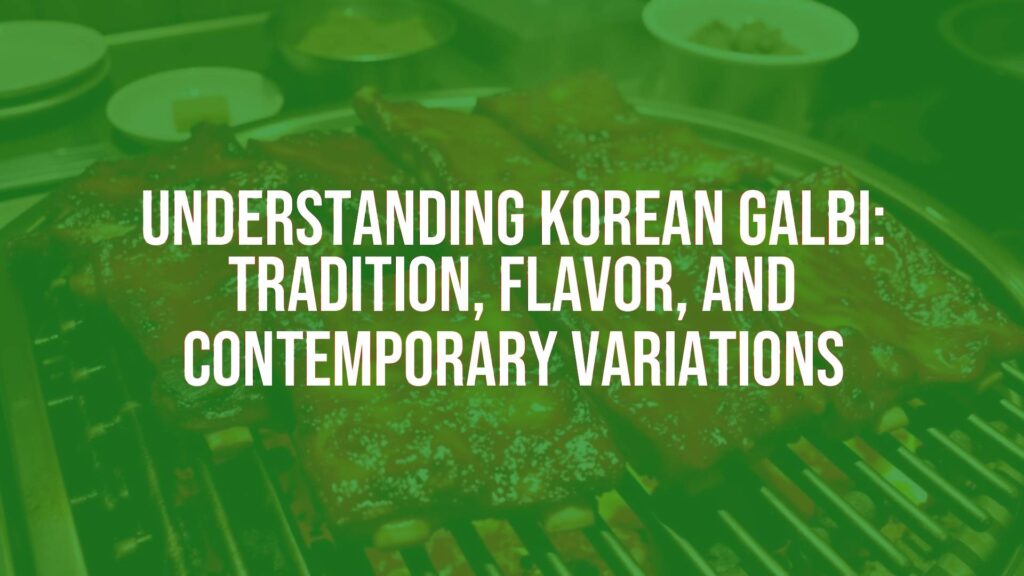
Introduction to Galbi: Korea’s Iconic Grilled Ribs
Galbi (갈비), often translated as “Korean BBQ short ribs,” is a celebrated dish within the rich landscape of Korean cuisine. Renowned for its harmonious blend of sweet and savory flavors and signature grilling technique, galbi captures the essence of communal dining and culinary craftsmanship in Korea.
Defining Features of Korean Galbi
At its core, galbi is made from beef short ribs, though pork (dwaeji galbi) and even chicken variations exist. The defining characteristic lies in the marinade—a mixture of soy sauce, sugar, sesame oil, garlic, and often Asian pear or apple for tenderizing. This marinade infuses the meat with complex flavors while also creating a delectable caramelization when grilled over an open flame. The ribs are typically cut either across the bone (LA galbi style) for thin, flanken slabs, or along the bone for more traditional thick pieces.
A Glimpse into Galbi’s Historical Roots
Galbi has its origins in the royal courts and aristocratic households of the Joseon Dynasty, where beef was a symbol of status and a treasured protein. With time, the dish transitioned into mainstream tables, especially with the increase in beef production during the 20th century. Today, galbi is a staple at celebratory feasts and popular barbecue restaurants throughout Korea and beyond.
Regional Significance and Local Interpretations
While galbi is enjoyed nationwide, certain regions lend their own touches. Suwon-style galbi is famous for its generous, thick-cut portions and a slightly sweeter marinade, while Seoul renditions often highlight a balanced, nuanced flavor. Jeolla province may showcase more intense usage of aromatics, further showcasing the diversity of this dish across Korea.
Essential Ingredients and Culinary Variations
Traditional beef galbi requires short ribs, soy sauce, sugar (sometimes honey), garlic, onion, sesame oil, and black pepper. Fruit like Korean pear or apple is often blended into the marinade for added sweetness and tenderizing effects. Green onions and toasted sesame seeds are common garnishes. Variations include:
- Pork Galbi (Dwaeji Galbi): Uses pork ribs and typically features a spicy gochujang (Korean chili paste) marinade.
- LA Galbi: Employs the thin, cross-cut rib style that became prevalent in Korean-American cuisine.
- Chicken Galbi: Rare, but sometimes seen as an adaptation for poultry lovers using similar marinades.
While beef short ribs are traditional, ingredient substitutions such as boneless cuts or alternative proteins (like tofu for vegetarian versions) can be made, although these may alter the iconic taste and texture of the dish.
Serving Customs and Pairings
Galbi is synonymous with the lively atmosphere of Korean BBQ, where diners grill meat tableside. It is usually served with an array of banchan (side dishes), fresh lettuce or perilla leaves for wrapping, slices of garlic and chili pepper, and ssamjang (spicy dipping sauce). Steamed rice is a classic companion, and a light soup may round out the meal. Beverages such as soju, maekju (Korean beer), or even makgeolli (rice wine) are popular pairings that enhance the barbecue experience.
Conclusion
Whether enjoyed in bustling city BBQ houses or at home gatherings, galbi reflects the convivial spirit and inventive flavors of Korean cuisine. Its adaptability to different meats and marinades ensures that there is a galbi style for every palate, making it a beloved dish both in Korea and around the world.
