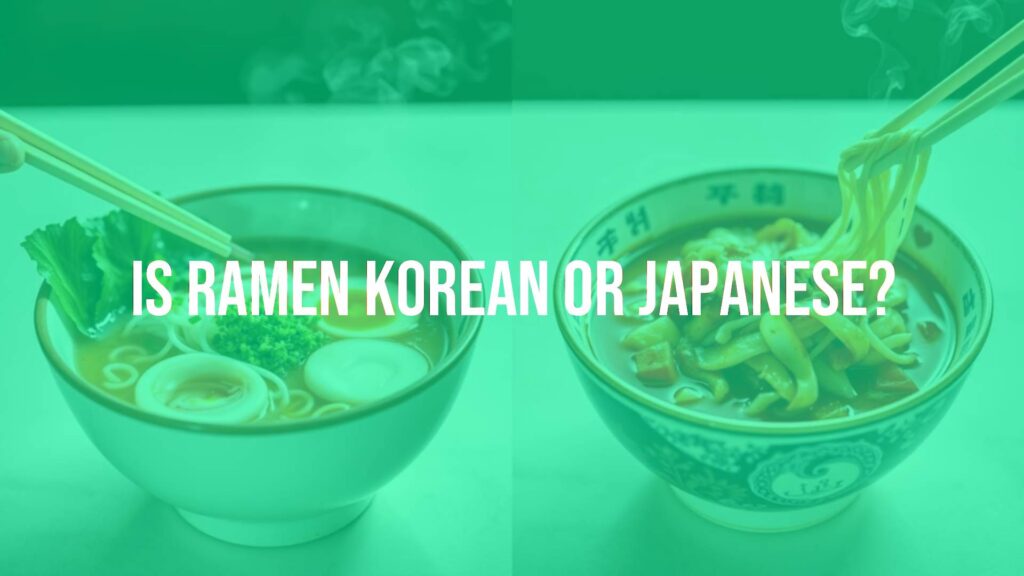
People often ask, “Is ramen Korean or Japanese?” The answer is simple: ramen is a Japanese noodle soup. However, it’s worth mentioning that Korea has its own similar and very popular noodle soup, called ramyeon. While these two noodles have roots in the same idea (noodles in broth), ramen and ramyeon have changed to fit the tastes and cultures of Japan and Korea, becoming very different from each other over time.
To really tell the difference between ramen and ramyeon, we have to look at where they come from, how they’re made, what ingredients they use, and what they mean to people in each country. Both started with a common idea but ended up taking completely separate paths. Today, ramen is a classic Japanese dish, while ramyeon is a well-loved Korean comfort food, known for its spicy taste and quick preparation.

Is Ramen Korean or Japanese?
What Makes Ramen and Ramyeon Different?
Ramen is a Japanese noodle soup with wheat noodles in a flavored broth, usually seasoned with soy sauce or miso, and topped with things like sliced pork, soft-boiled eggs, and green onions. The focus is on carefully cooked broth and fresh ingredients. Each part of the dish, from the chewy noodles to the rich broth, is chosen to create a balanced, tasty meal.
Ramyeon, which is Korea’s version, is known for its bold, spicy flavors and is usually sold as instant noodles. While some fresh ramyeon dishes exist, the instant type is more common. A typical packet includes dried, curly noodles, dried vegetables, and a packet of seasoning. Ramyeon is all about strong flavors and speed, rather than slow, detailed cooking.
Common Myths About Ramen’s Origins
Some people think ramen comes directly from the Chinese dish called “lamian” (pulled noodles). While the word “ramen” comes from the Chinese “lāmiàn,” Japanese ramen noodles aren’t pulled-they’re sliced. In reality, ramen was shaped more by southern Chinese noodle soups, especially those from Cantonese cooks in Yokohama, Japan.
Another source of confusion is instant noodles. Many people outside of Asia first try “ramen” as an instant product and think that’s the full version of the dish. But real ramen, made fresh and cooked with care, came first. Instant ramen makes ramen easy to prepare, but it’s a faster and simpler version of the real thing.
History: From China to Japan and Korea
The Chinese Noodle Connection
Both ramen and ramyeon started out inspired by Chinese noodles. Chinese immigrants brought wheat noodle soups to Japan in the late 1800s, and these became the base for ramen. Early Japanese versions were simple and topped with things like roast pork, and were called “Nankin soba.”
Ramyeon’s story starts with Japanese instant ramen. Korean companies learned the drying process from Japan, but changed the flavors to match Korean tastes. Both soups go back to the original idea of noodles in a savory soup-something first developed in China.
How Ramen Changed in Japan
At first, ramen was mostly eaten in Japanese Chinese communities. But after World War II, ramen really took off across Japan. Cheap wheat flour was widely available, and returning Japanese soldiers who had lived in China knew Chinese-style noodles. Many set up ramen stalls in cities, and ramen became a filling, affordable meal.

In the 1950s, “shina soba” appeared with thicker noodles and richer broth. In 1958, Momofuku Ando invented instant noodles, making ramen more available to everyone. Now, there are hundreds of types of ramen all over Japan.
How Ramyeon Started in Korea
Korea’s ramyeon began in the 1960s, after businessman Jean Jon-Yeon tried Japan’s instant ramen. He brought the idea back to Korea, but made the soup much spicier to suit Korean tastes. Ramyeon became a go-to meal, especially during tough times, because it was cheap and filling. It soon became a regular part of Korean meals, especially as instant products. Thanks to the spread of Korean culture, more people worldwide have started eating ramyeon.
What Is Japanese Ramen?
Main Ingredients and How It’s Made
Japanese ramen uses a few main parts:
- Noodles: Made from wheat flour, salt, water, and kansui (alkaline water), which gives them their yellow color and chewy texture
- Broth: Can be made from chicken, pork, or both, and sometimes includes ingredients like dried fish, seaweed, or mushrooms
- Tare: The main seasoning (soy sauce, salt, or miso)
- Aroma Oil: Adds extra flavor, for example from sesame or garlic oil
- Toppings: Things like sliced pork, boiled eggs, green onions, seaweed, and bamboo shoots

Broth is often simmered for hours. Noodles are cooked and added to the bowl right before serving, then topped with fresh ingredients. Careful attention is paid to each part to make every bowl delicious and just right.
Well-Known Regional Types of Ramen
| Type | Region | Main Features |
|---|---|---|
| Sapporo Miso Ramen | Hokkaido | Miso-based broth, topped with sweetcorn, butter, and pork |
| Hakata Tonkotsu Ramen | Kyushu | Rich pork bone broth, thin noodles, and bold toppings |
| Tokyo Shoyu Ramen | Tokyo | Soy sauce broth, curly noodles, simple toppings |
| Kitakata Ramen | Fukushima | Thick, flat noodles, clear pork and sardine broth |
| Yokohama Ie-kei Ramen | Yokohama | Thick noodles, pork and soy sauce broth, customizable options |
The Role of Ramen in Japanese Life
Ramen is more than food in Japan. It’s loved by people of all ages, enjoyed alone or with family and friends, and even respected as an art. From small local shops to restaurants with top awards, ramen is everywhere in Japan. Slurping noodles loudly isn’t rude-it’s considered a compliment!

What Is Korean Ramyeon?
Instant Noodles and Spicy Taste
Most of the time, “ramyeon” in Korea refers to instant noodles. These come dried and curly with a packet of powder soup and dried vegetables. Boiling water turns the contents into a meal in just a few minutes. What sets Korean ramyeon apart is its spicy flavor, mostly thanks to chili, garlic, and sometimes gochujang (chili paste). It’s a hit for people who love bold, hot food.
Popular Toppings and Ways to Eat Ramyeon
- Kimchi: Spicy, fermented cabbage often mixed in with the noodles
- Egg: Often cracked into the cooking noodles to poach
- Scallions and Vegetables: Added for crunch and freshness
- Cheese: A slice of cheese melts into the broth to soften the spice
- Rice Cakes or Dumplings: Added for a fuller meal
- Leftover meats and vegetables: Added for extra flavor and nutrition
While most people eat ramyeon as a quick meal at home or a late-night snack, they often add these extra ingredients to make it more filling and tasty.
Famous Brands and Ramyeon’s Place in Korea
- Shin Ramyun: From Nongshim, famous for spicy broth, known worldwide
- Jin Ramen: From Ottogi, comes in mild and spicy flavors
- Buldak Ramyeon: From Samyang, known for extremely spicy chicken flavor
- Jjapaghetti: Instant version of Korean black bean noodles, became popular after appearing in the movie “Parasite”
Ramyeon is featured often in Korean dramas and movies and is part of social life, seen in college dorms, family dinners, and with a side of soju (Korean alcohol). International interest in Korean culture has made ramyeon easy to find in many countries.
Ramen vs. Ramyeon: The Main Differences
These two noodle dishes started from the same idea, but have grown very different. Here’s how they compare:
| Feature | Japanese Ramen | Korean Ramyeon |
|---|---|---|
| Noodle Type | Fresh, wheat noodles with chewy texture, made with alkaline water | Mostly instant, dried, curly noodles, softer texture |
| Broth | Rich, slow-cooked broths (pork, chicken, miso, or soy), savory and layered | Spicy, bold, simple, and mainly from seasoning packets |
| Preparation | Made fresh, takes time, careful cooking | Quick and simple, ready in a few minutes with hot water |
| Toppings | Pork slices, soft-boiled eggs, bamboo shoots, seaweed, green onions, sometimes corn or butter | Kimchi, egg, cheese, dumplings, rice cakes, leftover meats/veggies |

Why Are Ramen and Ramyeon Mixed Up?
Many people mix up ramen and ramyeon for a couple of reasons:
The Impact of Instant Noodles
For lots of people outside of Asia, “ramen” means instant noodles. Since both Japan and Korea sell instant noodle soups around the world-and since Korean brands like Nongshim label their noodles as “ramen” in other countries-people may think any spicy noodle soup is Japanese ramen, or that all ramen is spicy and comes in a packet. In reality, instant noodles started in Japan, but Korea’s versions are very different and focused on spicy flavors.
Similar Names and Packaging
The names “ramen” and “ramyeon” both come from the Chinese word for noodles, and sound almost the same. In Korea, “ramyeon” is the actual name, but when these noodles are sold in other countries, the packs often use the word “ramen” for easier marketing. That’s why it’s easy to confuse them.
Frequently Asked Questions
Does “ramen” ever mean Korean noodles?
Strictly, “ramen” is Japanese, but in many Western countries, the word can be used for both Japanese ramen and Korean ramyeon. This is because Korean brands often use the term “ramen” outside Korea to reach more customers. Still, in Korea, “ramyeon” means their spicy instant noodles.
How does the taste compare?
Japanese ramen has a savory, complex taste, coming from deep broths that can take hours to make. It’s rich but usually not very spicy. Korean ramyeon is known for its strong, spicy flavors from chili and spice mixes. The difference is clear-ramen is more delicate and layered, while ramyeon is bold and hot.
Who invented instant noodles: Japan or Korea?
Instant noodles were created in Japan by Momofuku Ando in 1958. Korea started making their own spicy version a few years later, inspired by the Japanese invention. So instant noodles are Japanese, but Korea made their own unique, spicy type known as ramyeon.
Summary: Is Ramen Korean or Japanese?
While both dishes were inspired by the idea of Chinese noodle soups, ramen and ramyeon grew into different foods that reflect Japanese and Korean culture. Ramen is known for its slowly cooked broths, variety, and careful preparation. Ramyeon stands out with its spicy seasoning and instant noodles, providing a fast, comforting meal. Both are delicious in their own way, but they come from different traditions. So, next time you enjoy a bowl of noodles, whether it’s a slow-cooked ramen from Japan or a spicy instant ramyeon from Korea, you’re tasting a piece of each country’s food story.
